



Difference between a Medical Monitor and Principal Investigator
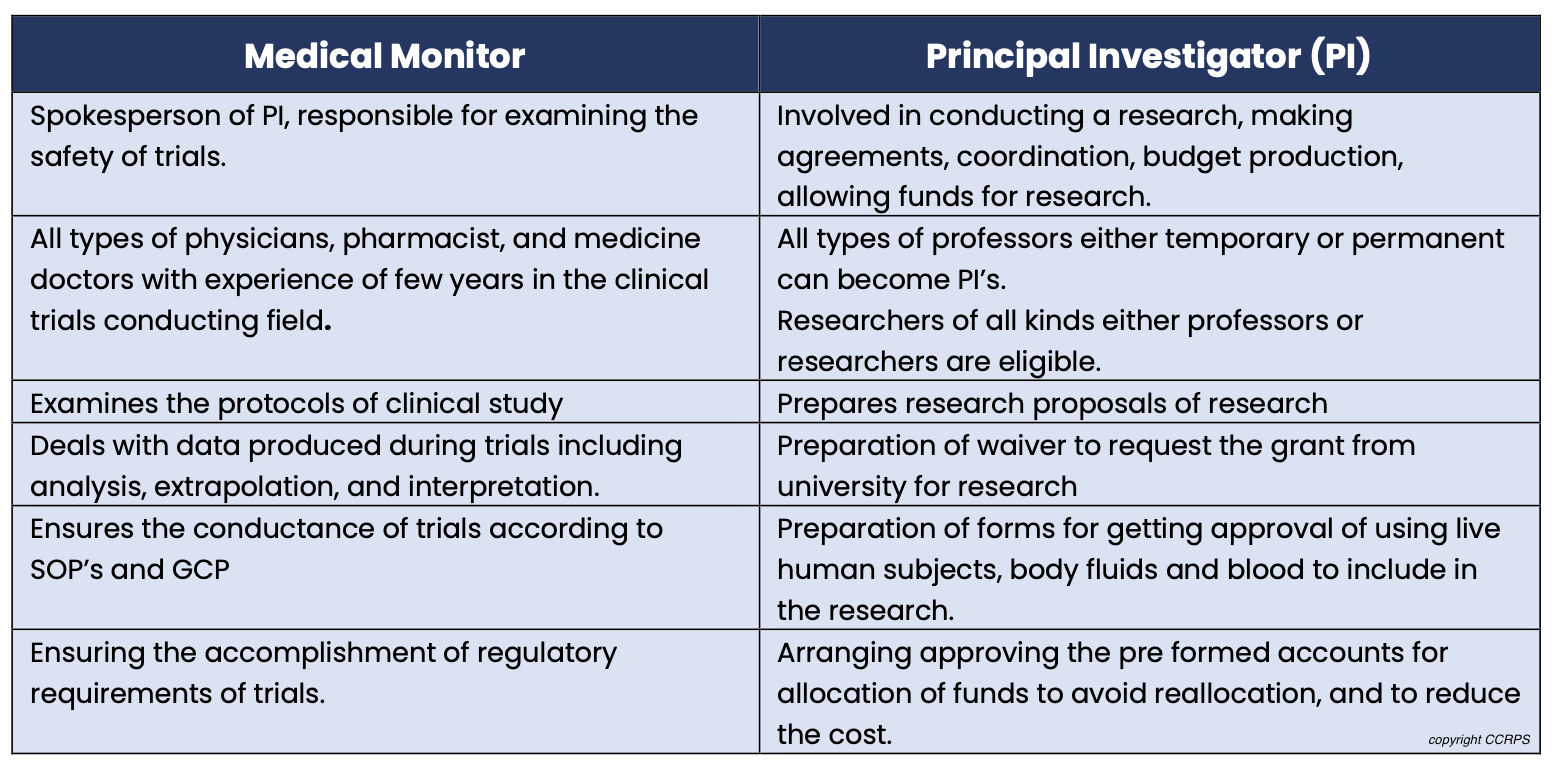
https://ccrps.org/clinical-research-blog/medical-monitor-responsibilities-in-a-clinical-trial
Pharmacovigilance:
A Complete Guide to Pharmacovigilance and Drug Safety Training Feb 16 What Is Pharmacovigilance? - Definition, Jobs, Salary, And Pharmacovigilance Certification Pharmacovigilance A Guide All About Pharmacovigilance
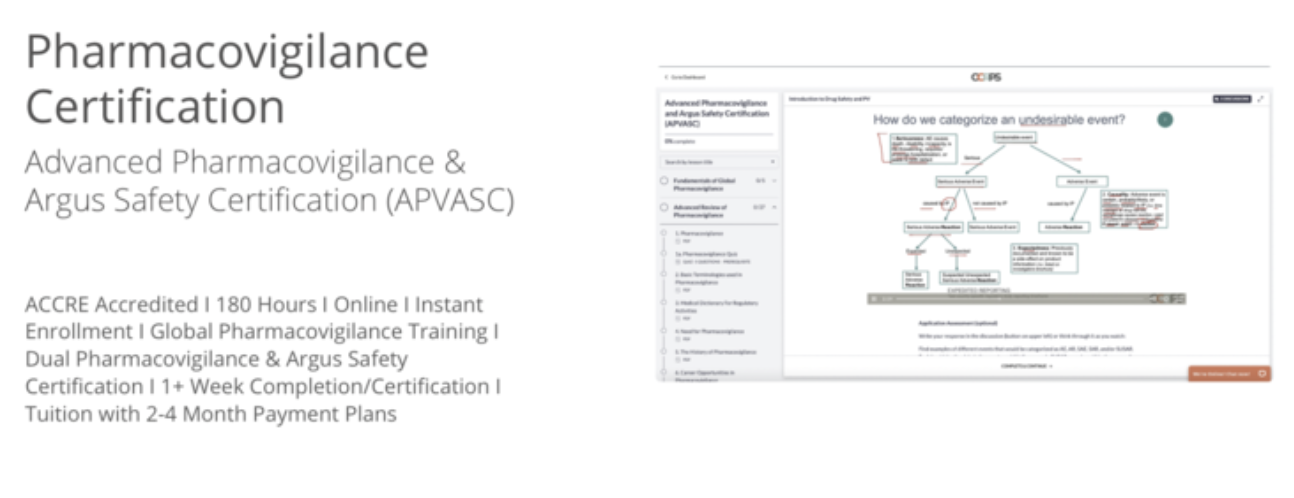
To increase your chances of getting hired or promoted, scroll below or enroll in our CCRPS Advanced Pharmacovigilance and Argus Safety Certification (APVASC)TM Course which covers drug safety and pharmacovigilance training
What is pharmacovigilance?
Pharmacovigilance Is The Study Of Two Primary Outcomes In The Pharmaceutical Industry: Safety And Efficacy. Essentially, it asks does a drug work and is it safe?
Pharmacovigilance is the process of monitoring the effects of drugs, both new and existing ones. This includes collecting data, analyzing it, and taking steps to prevent any negative effects. Pharmacovigilance must happen throughout the entire life cycle of a drug, from when it is first being developed to long after it has been released on the market.
What is the Aim Of Pharmacovigilance?
Pharmacovigilance is required through the entire life cycle of a drug – starting at the preclinical development stage and going right through to continued monitoring of drugs once they hit the market.
Pharmacovigilance includes collecting, analyzing, monitoring, and preventing adverse effects in new drugs and therapies. It can be broken down into three main sub-specialisms:
1.Surveillance: Surveillance is geared towards risk management and signal detection. Roles in this specialism focus analysis of drug safety information gathered from other professionals. Surveillance is responsible for creating development safety update reports (DSURs) for drugs in clinical research and periodic benefit-risk evaluation reports (PBRER) for drugs that are on the market.
2.Operations: Operations focus on collecting and recording information during preclinical development, early clinical trials, and gathering real-world evidence (RWE) of adverse events reported by medical professionals and patients. Operations may also create standard operating procedures (SOPs), individual case study reports, and regulatory reports.
3.Systems: Systems is concerned with the development of robust systems to store and manage data relating to pharmacovigilance. It involves keeping abreast of changing regulations and guidance in the pharmacovigilance industry and ensuring compliance at all levels of an organization. The Qualified Person for Pharmacovigilance (QPPV) is responsible for ensuring that an organization's pharmacovigilance system meets all applicable requirements. Learn more
What is Pharmacovigilance Training?
If you’re looking to boost your career prospects in the pharmaceutical industry, drug safety training is a great string to add to your bow. Whether you want to move into clinical research or enhance your profile in your existing company, certification is crucial.
If you run a company and want to provide your staff with drug safety training to increase their knowledge and provide a safer working environment, our course is for you too.
We even help train Senior PVs from Fortune 500 companies to improve their efficiency and compliance.
No experience? No worries!
Our triple-accredited Advanced Pharmacovigilance and Argus Safety Certification (APVASC)TM is designed to teach you all you need to know in just 1 week!
Recognized Drug Safety Training I 180 Hours I On-Demand I Accredited I 25+ Modules I Training Compliance I Instant Enrolment I 1+Wk Certification I
What do Pharmacovigilance Officers do?
View fullsize
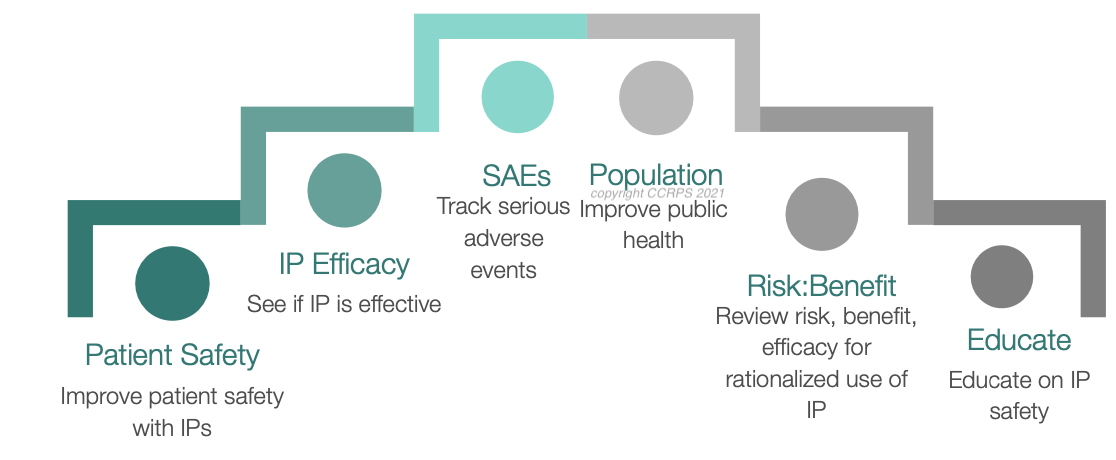
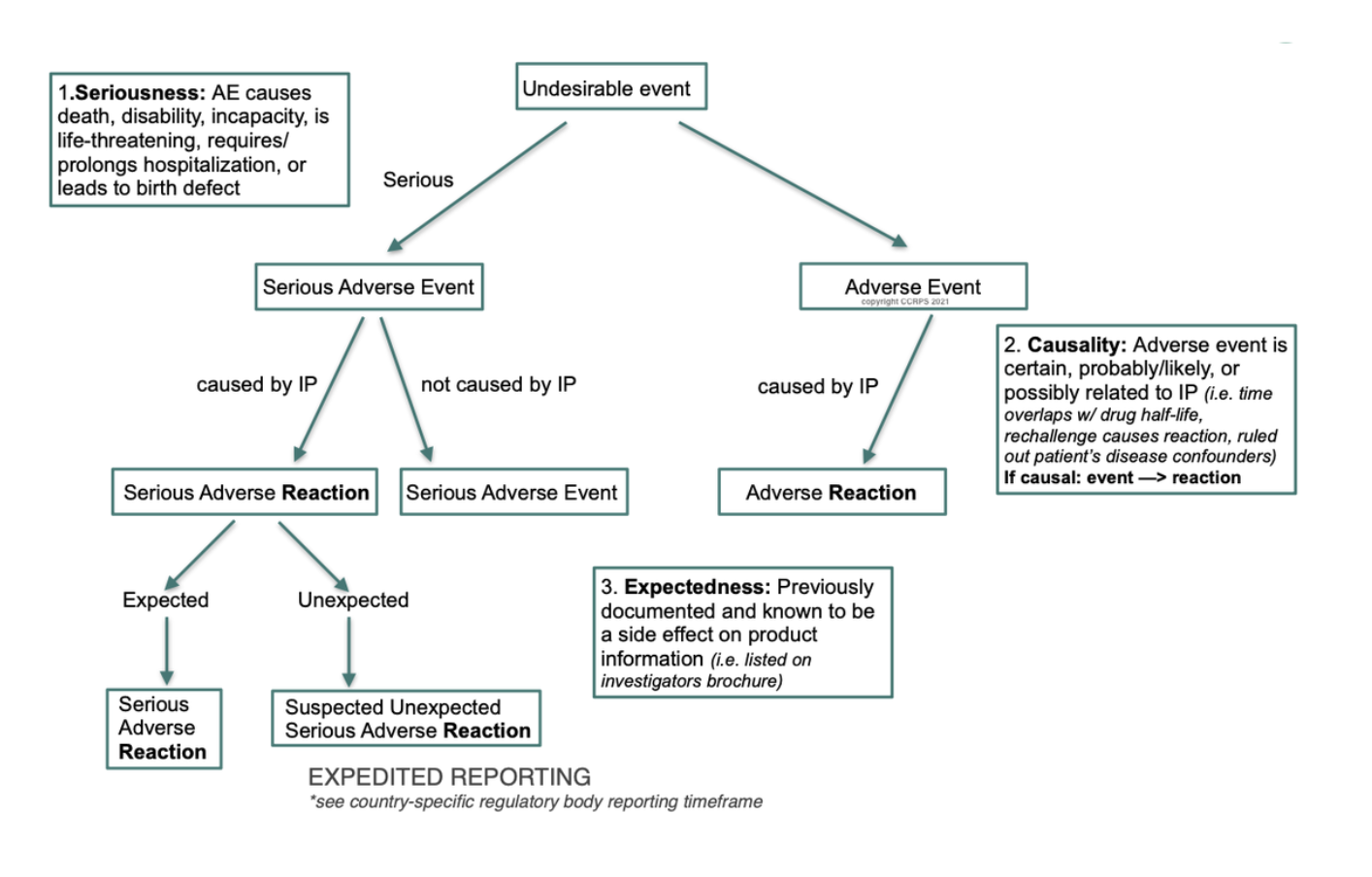
The exact nature of each role varies, but in essence, Pharmacovigilance Officers (PVs) collect adverse event data on drugs (Phase 4) to analyse and create usage warnings for the drug.
Some roles insist on physicians, nurses, or those with a Master of Science degree. A Master’s in pharmacovigilance is your best route into the industry – but that takes up to 2 years and is very expensive.
Your quicker route into the industry is with a drug safety accreditation.
Please note: A minimum of an associate degree is required to take any training course, including ours.
A Complete Guide to Pharmacovigilance and Drug Safety Training Feb 16 What Is Pharmacovigilance? - Definition, Jobs, Salary, And Pharmacovigilance Certification Pharmacovigilance A Guide All About Pharmacovigilance
To increase your chances of getting hired or promoted, scroll below or enroll in our CCRPS Advanced Pharmacovigilance and Argus Safety Certification (APVASC)TM Course which covers drug safety and pharmacovigilance training
What is pharmacovigilance?
Pharmacovigilance Is The Study Of Two Primary Outcomes In The Pharmaceutical Industry: Safety And Efficacy. Essentially, it asks does a drug work and is it safe?
Pharmacovigilance is the process of monitoring the effects of drugs, both new and existing ones. This includes collecting data, analyzing it, and taking steps to prevent any negative effects. Pharmacovigilance must happen throughout the entire life cycle of a drug, from when it is first being developed to long after it has been released on the market.
What is the Aim Of Pharmacovigilance?
Pharmacovigilance is required through the entire life cycle of a drug – starting at the preclinical development stage and going right through to continued monitoring of drugs once they hit the market.
Pharmacovigilance includes collecting, analyzing, monitoring, and preventing adverse effects in new drugs and therapies. It can be broken down into three main sub-specialisms:
1.Surveillance: Surveillance is geared towards risk management and signal detection. Roles in this specialism focus analysis of drug safety information gathered from other professionals. Surveillance is responsible for creating development safety update reports (DSURs) for drugs in clinical research and periodic benefit-risk evaluation reports (PBRER) for drugs that are on the market.
2.Operations: Operations focus on collecting and recording information during preclinical development, early clinical trials, and gathering real-world evidence (RWE) of adverse events reported by medical professionals and patients. Operations may also create standard operating procedures (SOPs), individual case study reports, and regulatory reports.
3.Systems: Systems is concerned with the development of robust systems to store and manage data relating to pharmacovigilance. It involves keeping abreast of changing regulations and guidance in the pharmacovigilance industry and ensuring compliance at all levels of an organization. The Qualified Person for Pharmacovigilance (QPPV) is responsible for ensuring that an organization's pharmacovigilance system meets all applicable requirements. Learn more
What is Pharmacovigilance Training?
If you’re looking to boost your career prospects in the pharmaceutical industry, drug safety training is a great string to add to your bow. Whether you want to move into clinical research or enhance your profile in your existing company, certification is crucial.
If you run a company and want to provide your staff with drug safety training to increase their knowledge and provide a safer working environment, our course is for you too.
We even help train Senior PVs from Fortune 500 companies to improve their efficiency and compliance.
No experience? No worries!
Our triple-accredited Advanced Pharmacovigilance and Argus Safety Certification (APVASC)TM is designed to teach you all you need to know in just 1 week!
Recognized Drug Safety Training I 180 Hours I On-Demand I Accredited I 25+ Modules I Training Compliance I Instant Enrolment I 1+Wk Certification I
What do Pharmacovigilance Officers do?
View fullsize
The exact nature of each role varies, but in essence, Pharmacovigilance Officers (PVs) collect adverse event data on drugs (Phase 4) to analyse and create usage warnings for the drug.
Some roles insist on physicians, nurses, or those with a Master of Science degree. A Master’s in pharmacovigilance is your best route into the industry – but that takes up to 2 years and is very expensive.
Your quicker route into the industry is with a drug safety accreditation.
Please note: A minimum of an associate degree is required to take any training course, including ours.
How To Get Into Pharmacovigilance
 ,
,The CCRPS pharmacovigilance certification to provide advanced training for entry level pharmacovigilance to ensure you are fully prepared for a career in drug safety monitoring. We are a non-profit organization dedicated to providing advanced pharmacovigilance training to students at all stages of their careers.
The courses provide you with theory and practical-based learning in pharmacovigilance and give you vital industry experience.
Our pharmacovigilance training courses meet
WHO-ISoP and FDA guidelines and are accredited by the ACCRE and other recognized accreditation boards.





Christine Eve
Founder & CEO
The Consilox agency company also impressed us with their transpa regarding costs. The initial quote was best.

Kevin Smith
Customer
The Consilox agency company also impressed us with their transpa regarding costs. The initial quote was best.

Jessica Brown
Founder & CEO
The Consilox agency company also impressed us with their transpa regarding costs. The initial quote was best.

David Anderson
Customer
The Consilox agency company also impressed us with their transpa regarding costs. The initial quote was best.
Susan Neill
Founder & CEO
The Consilox agency company also impressed us with their transpa regarding costs. The initial quote was best.
